Maldives Transfers in Bad Weather: Speedboat, Ferry, Flight & Seaplane
Wondering what happens if there’s a storm on the day of your transfer in Maldives? Here’s everything you need to know. The good news is that rain alone almost never cancels anything. The bad news: other factors can, and not all modes of transport behave the same way. Cancellations are uncommon — but they do happen, and it’s worth being prepared.
In Maldives there are four ways to reach your island: the speedboat, the public ferry, the domestic flight and the seaplane. Each one reacts differently to bad weather. This guide explains what to expect from each.
Bad weather in Maldives and your transfer
Maldives is a unique destination in every way — and getting to your hotel or the airport is no different. Given the special characteristics of transfers in Maldives, weather can play a real role. Despite being a destination with generally good weather most days, even in low season, meteorological events can significantly impact transport to and from the islands.
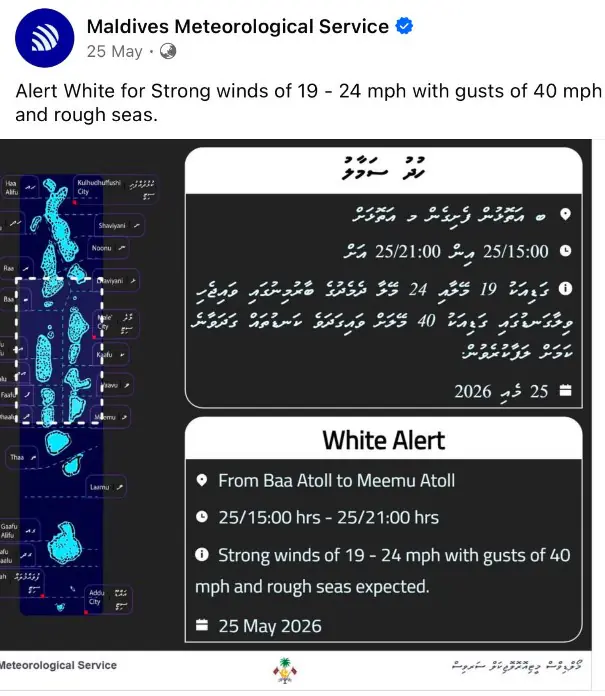
The Maldives Meteorological Service issues alerts whenever weather fronts reach the archipelago.
What does bad weather actually mean in Maldives?
Before talking about cancellations, it’s worth understanding what types of bad weather exist in Maldives — because not everything affects all modes of transport equally.
In general, Maldives’ tropical climate produces brief weather events that don’t last long and typically just cause delays. But as in any part of the world, there are also longer-lasting systems that can affect travel for several days. The good news is that Maldives is not a hurricane zone, unlike other tropical regions.
We’d also like to point out that in over 10 years working in Maldives, none of our travellers with Maldivas Increíble has ever missed an international flight due to weather.

The weather phenomena that most commonly affect transfers in Maldives are:
- Tropical rain: short, intense downpours, common year-round but more frequent during monsoon season. They typically last 20–40 minutes and then clear. On their own, they don’t cancel any transfer.
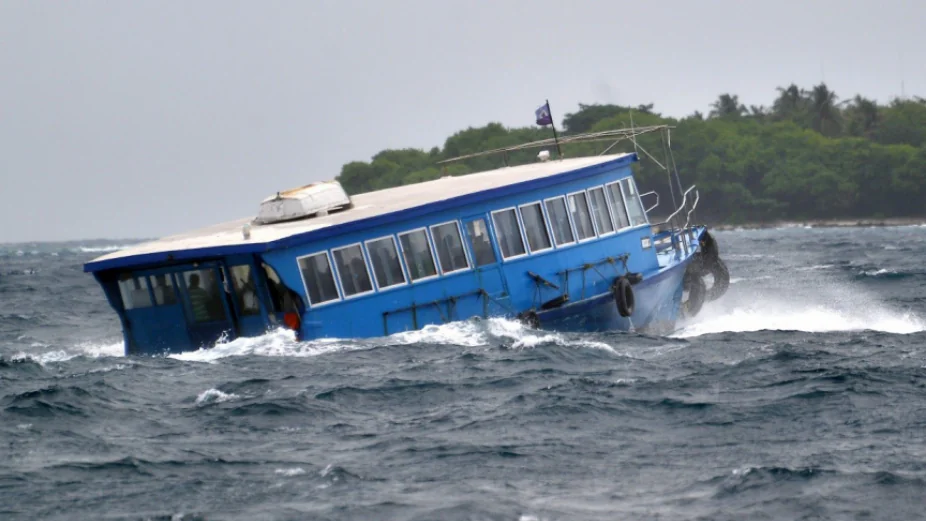
- Swell and rough seas: the most decisive factor for speedboats and ferries. The sea can be choppy even without rain. This is what cancels maritime transfers most often, without a doubt.
- Thunderstorms: the main issue for seaplanes and domestic flights. They reduce visibility and create turbulence that makes safe operation impossible.
- Strong winds: affect all modes of transport to varying degrees. Beyond a certain wind speed, both boats and small aircraft have to stay grounded.
The south-west monsoon (May–October) is the season with the most weather incidents, though cancellations remain the exception rather than the rule. The north-east monsoon (November–January) is calmer and causes far fewer problems.
| Transfer | Rain? | Swell? | Thunderstorm? | Cancellation frequency |
|---|---|---|---|---|
| Public ferry | Not affected | Yes, a lot | Slightly | Medium — cancels most often |
| Seaplane | Not affected | Yes, depends on island | Yes, a lot | Low |
| Speedboat | Not affected | Yes, moderate | Slightly | Low |
| Domestic flight | Not affected | Not affected | Slightly, crosswind only | Low — most reliable |
Public ferry in Maldives in bad weather
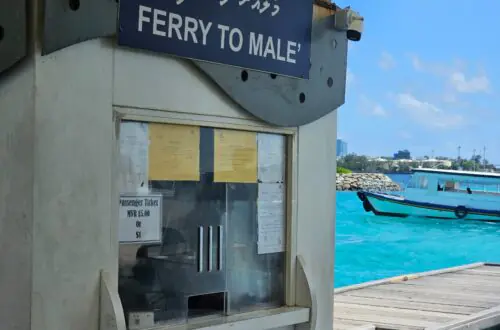
The public ferry is, by far, the most vulnerable mode of transport to bad weather in Maldives. Contrary to what you might expect — being the largest boat — it’s the one that cancels most frequently and with the greatest impact on travellers.
The reason is simple: MTCC ferries cover long routes across open atolls, where swell can be considerable. When the Meteorological Service issues an alert — even a yellow alert, the lowest level — MTCC may cancel the majority of its services.
The added problem is that the ferry doesn’t operate every day on every route. Many islands only have service two or three times a week. If your ferry is cancelled, the next departure may be two or three days away, with no real alternative in the meantime.
⚠️ Important: always have a backup plan if you're using the public ferry as your main transfer.
For real-time updates on service status, you can call MTCC’s customer service line: 1650.
Seaplane in Maldives in bad weather
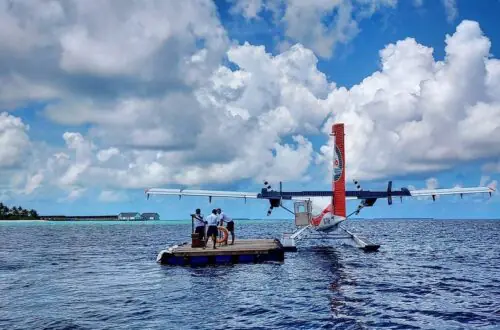
The seaplane is sensitive to atmospheric conditions. It’s not swell that affects it most, but visibility and thunderstorms. TMA (Trans Maldivian Airways), Manta Air and Maldivian — the seaplane operators in Maldives — only take off when visibility is sufficient and there’s no electrical activity along the route.
Rain alone doesn’t prevent the flight. A seaplane can operate perfectly well in moderate rain. What does ground it is a thunderstorm, low visibility from fog or low cloud, and strong winds over the water during landing.
Swell can be a problem for certain resorts that don’t have a protected lagoon for landing, but in many cases this is resolved by landing at a nearby island and then taking a short speedboat transfer to the final destination. The good news is that for the return journey to Malé, seaplanes land in a closed lagoon — the hydroport in Hulhumalé — which is unaffected by sea conditions. This makes it more reliable when it comes to catching international flights.
During the south-west monsoon, delays can happen. In extreme cases, passengers may be held in Malé or at the resort for 24–48 hours. Operators look for windows of favourable weather and manage flights as soon as conditions allow.
In some cases, when a seaplane is cancelled due to weather, the resort may offer a speedboat transfer as an alternative. This depends on the resort’s distance and sea conditions at the time.

Speedboat in Maldives in bad weather
The speedboat is more resilient to bad weather than the ferry. What affects it is not rain, but swell. Strong waves — over two metres — can force the captain to cancel or delay departure for safety reasons.
Authorities can restrict sea travel, but only in extreme cases. The decision is usually made by the captain based on conditions at the time. Each operator assesses the situation according to their own criteria. In practice, a speedboat can depart in heavy rain, moderate wind and some swell — uncomfortable, but possible. What rarely happens is a departure when the sea is truly rough. But if it does depart, you can trust the captain’s judgment that it’s safe, even if it’s not the most enjoyable journey.
The size of the speedboat also matters — a small 4-person vessel is very different from a large 50-seat one.
When there’s a delay, speedboat operators usually wait for conditions to improve and leave as soon as they can. Total cancellations are less frequent than with the ferry and tend to happen only on the worst days of the south-west monsoon.
Transfers Maldives tip: on bad weather days, travelling early in the morning is often a better option — seas tend to be calmer, and statistically there are fewer cancellations.
Domestic flight in Maldives in bad weather
The domestic flight is the most reliable mode of transport in bad weather conditions. Aircraft are equipped to operate in conditions that would ground speedboats and ferries, and pilots are trained for the region’s tropical climate.
That said, domestic flights are not immune to weather. Direct thunderstorms over the destination airstrip can delay arrivals. Local airstrips have short runways and lack advanced instrumentation, which makes them more sensitive to strong crosswinds. In very extreme conditions, a flight may be diverted or cancelled.
In practice, delays are the most common issue — anywhere from 30 minutes to a few hours. Complete cancellations are infrequent and tend to occur only when severe storms affect the entire region.
If your transfer combines a domestic flight with a short speedboat ride to your final destination (the most common setup), bear in mind that even if the flight departs on time, the final speedboat leg may be delayed if the sea is choppy.
If your transfer is cancelled: what to do
If your transfer is cancelled due to bad weather, the first step is to contact whoever handled your booking — your resort, travel agent or the operator directly. They have the most up-to-date information and can offer alternatives.
Some practical situations you may encounter:
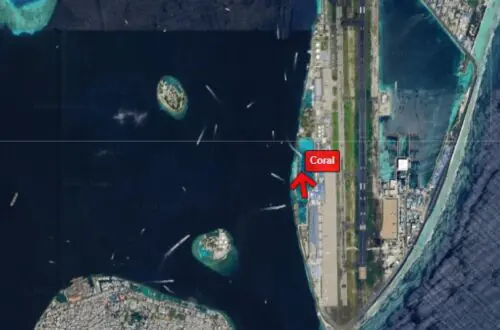
- Staying in Malé: if bad weather lasts more than a few hours, an overnight stay may be necessary. Hulhumalé, the artificial island connected to the airport, has several hotels at reasonable prices. There are also options in Malé city, a 10-minute ferry ride from the airport.
- Alternative transfer: in some cases, the resort may offer to switch from a seaplane to a speedboat if sea conditions allow, or vice versa.
- Waiting at the airport: Velana International Airport has a waiting area with restaurants and WiFi. If the delay is just a few hours, many travellers simply wait there.
- Travel insurance: weather-related cancellations may be covered depending on your policy. Check the conditions before you travel, especially if you’re going during monsoon season.
⚠️ Important: if you lose resort time due to a weather cancellation, resorts rarely offer automatic compensation. Some handle it case by case with goodwill, but it is not guaranteed.

Transfers Maldives tip: as in many other situations, travel insurance is your best protection against cancellations and bad weather — including the risk of missing an international flight.
It depends on the mode of transport. The public ferry cancels most frequently — on weather alert days, most services may be suspended. The seaplane also accumulates delays and cancellations on days with very bad weather and thunderstorms. The speedboat cancels less often but it depends on the boat size and route. The domestic flight is the most reliable. In any case, total cancellations are the exception, not the norm.
Yes. Rain alone doesn’t cancel speedboats in Maldives. What can cancel them is heavy swell. A speedboat can depart perfectly well in heavy rain if the sea is in acceptable condition. The final decision always rests with the captain.
Yes, in moderate rain the seaplane operates normally. What prevents it from flying is a thunderstorm, low visibility or strong winds. During monsoon season, delays are common but flights eventually depart once there’s a window of favourable weather.
It depends on the operator and the type of transfer. In general, operators try to offer an alternative — departing as soon as conditions improve — before issuing a refund. For seaplanes and domestic flights, operators usually rebook at no extra cost. The real concern would be missing an international flight, but this is very rare. Losing resort nights is also a risk. Having travel insurance that covers delays and interruptions due to weather is an extra layer of protection.
Yes, with the right expectations. Monsoon doesn’t mean constant rain or cancelled transfers. Prices are lower, there are fewer tourists, and showers are usually short. The main differences are: more variable weather, a higher risk of delays (especially by seaplane and ferry), and slightly rougher seas. With the right travel insurance and some flexibility in your schedule, monsoon can actually be a great time to visit Maldives.
Want to know more about each mode of transport? Read our full guides: speedboat in Maldives, public ferry in Maldives, domestic flight in Maldives and seaplane in Maldives.
Information about cancellations may vary depending on the operator and the specific weather conditions at the time.


También le puede interesar:
Maldives Transfer Cost
Maldives airport transfer