
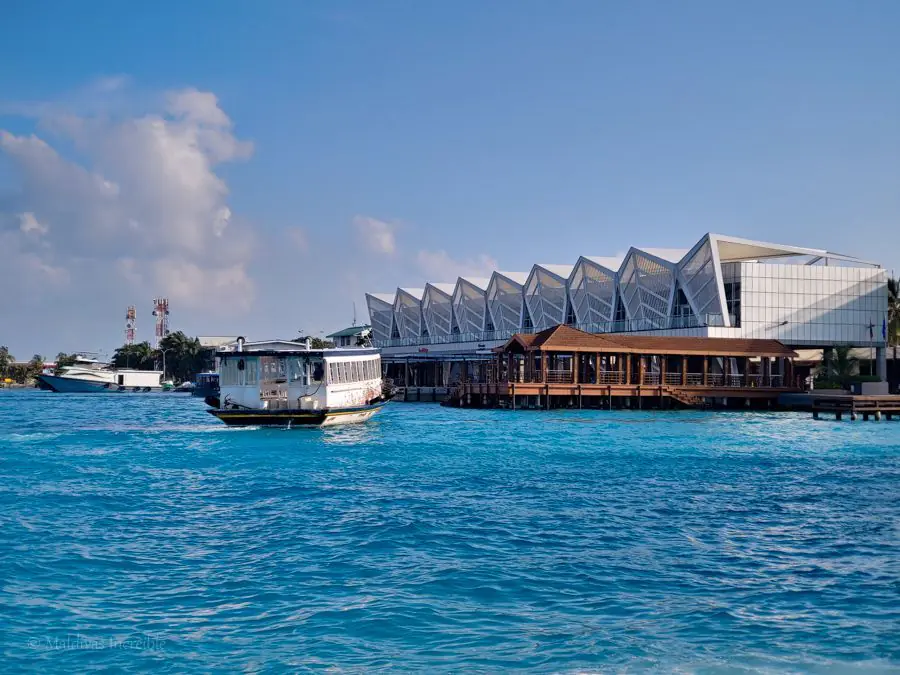
Public Ferry in Maldives
The public ferry in Maldives exists, it works, and it is the cheapest way to reach an inhabited island. But it has its rules: fixed schedules, limited frequency, and a terminal system that confuses almost everyone the first time.
We have put together a complete guide to the public ferry in Maldives: routes, schedules, prices and practical tips for travelling between local islands without surprises.
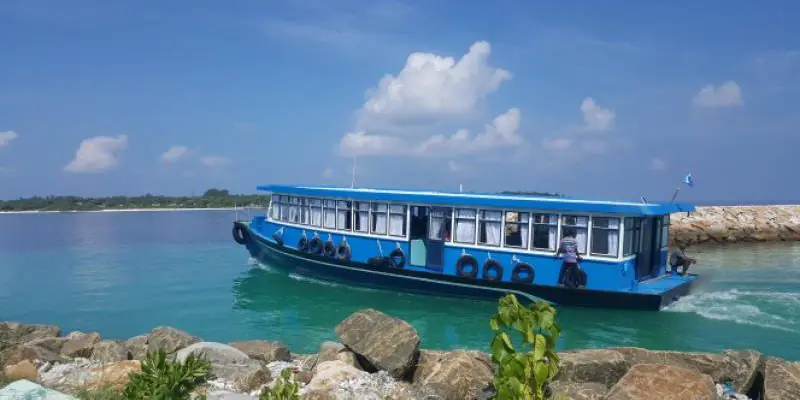
What is the Maldives public ferry. The people’s transport.
The ferry in Maldives is a kind of sea bus connecting different islands along different routes at low cost. It is widely used by Maldivians to move between islands for shopping, errands, visits and daily life.
The ferry is without doubt the cheapest way to travel between islands in Maldives.
It is worth noting that these public ferries always travel between local islands — they do not go to private resorts. Here we explain the difference between private resort islands and local islands in Maldives.
The public ferry service in Maldives is managed by the MTCC (Maldives Transport and Contracting Company) under the supervision of the RTA (Road Transport Authority). Although it is a service designed for local residents, it is a great way to get around when visiting Maldives. Prices are local, the pace is unhurried, and you share the journey with families, students and workers who make this trip regularly. That is also part of the experience.
What the ferry journey is like: What to Expect on Board
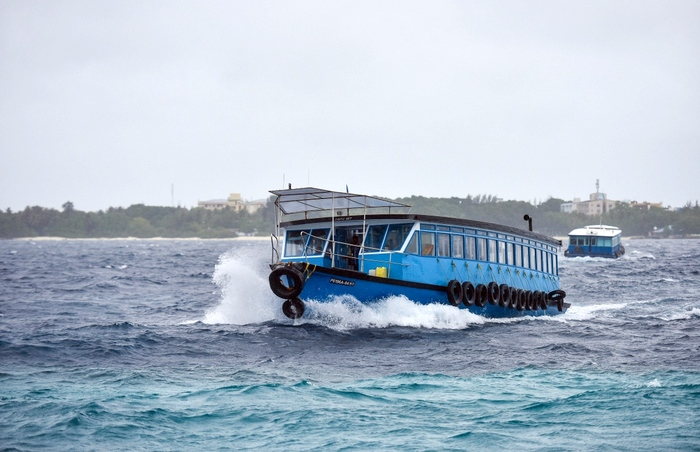
Public ferry vessels are mid-size enclosed passenger boats with seating, where each person carries their own luggage. They are not the fast speedboats you will see at the port. Further below we explain the difference between the two.
What you will find:
- Air conditioning: no, normally there is no air conditioning.
- Luggage: stored in the hold or at the front of the cabin. No formal size limits, but large rigid suitcases are awkward.
- Food and water: not served on board. It is advisable to bring your own.
- Punctuality: departures are usually on time, but cancellations due to bad weather are not uncommon.
- Seasickness: open-water crossings can be rough, especially between June and August (southwest monsoon). If you are prone to motion sickness, take preventive medication.
- Mobile coverage: usually available within the atolls, but not when the boat moves away from the islands.
Here you can see what a local ferry looks like:
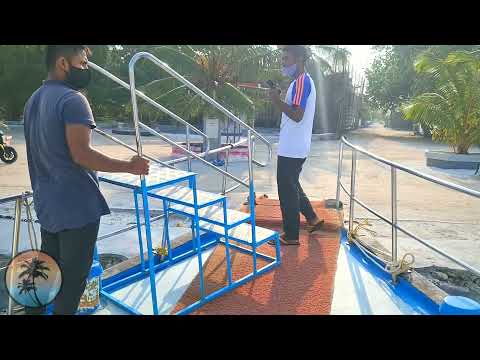
How to take the ferry in Maldives
You simply go to the port of your island at the time the boat arrives and board. Payment is made on board.
How to buy a ticket
It is a basic in-person ticket system: there is no online booking, no app, and no third-party platform officially selling RTA ferry tickets.
Available options:
- On board: a conductor collects fares on some routes. Common, but not guaranteed on all services.
- At the ticket window: some terminals have a ticket office, such as Malé and Hulhumalé.
- RTA offices in Malé: you can buy in advance during office hours.
Public ferry ticket price.
It depends on the distance and route, but it is extremely cheap compared to any other option in Maldives — typically between 25 and 100 MVR per person per journey (approximately $1.50–$6.50).
Payment: always in cash. Maldivian rufiyaa or US dollars.
When the public ferry is NOT the best option
There are situations where the ferry will not be possible or is simply not a good idea:
- Your flight arrives in the afternoon or evening. Ferries depart mainly in the morning. If you arrive late, you will likely have missed the last service of the day and will need to stay in Malé or Hulhumalé until the next day.
- Your island has no ferry service. Not all inhabited islands have a regular ferry route. Some are only accessible by private speedboat or domestic flight.
- Your schedule is tight. A journey that takes 3 hours by ferry might be 45 minutes by speedboat. Spending that time on a 5-night trip takes up a significant portion of your available days. In those cases, a shared or private speedboat makes more sense.
- You have a lot of luggage. It is manageable, but not comfortable on a full boat alongside local passengers.
Ferry vs. Speedboat in Maldives: Which Should You Choose?
Many islands are connected by both types of transport, so you can choose between them. Here is a summary of the key points that can help you decide, based on our experience.
| Public Ferry | Shared Speedboat | |
|---|---|---|
| Price | $1.50–$6.50 | $20–$70 |
| Speed | Slow | 3× faster in journey time |
| Schedule | Fixed, 2–6× per week | More flexible, daily |
| Night transfers | No | Sometimes |
| Luggage | You carry it yourself | They handle it, but limited |
| Best for | Travellers on a tight budget with plenty of time. | Travellers with a fixed schedule who want to make the most of their time. |
Maldives ferry routes. Search tool.
The public ferry covers primarily North Malé Atoll, South Malé Atoll, and some routes towards Ari Atoll and Vaavu Atoll. These are the most commonly used routes:
Central atolls (R, B, LH, AA, ADH, V, K) — Routes 203 to 310: covering Raa (R), Baa (B), Lhaviyani (LH), Alif Alif (AA) (Ari), Alif Dhaal (ADH), Vaavu (V) and Kaafu (K) atolls. These include direct connections to/from Malé with Thoddoo, Rasdhoo, Ukulhas, Kaashidhoo, Dhiffushi, Guraidhoo, Rakeedhoo and Mahibadhoo, plus internal routes within each atoll.
North (HA, HDH and SH atolls) — Routes 101 to 118: ferries connecting islands in Haa Alifu (HA), Haa Dhaal (HDH) and Shaviyani (SH) atolls. Most operate on specific days of the week.
Noonu Atoll (N) — Routes 201 and 202: He’nbadhoo–Manadhoo and Velidhoo–Manadhoo, with Manadhoo as the hub. Both operate Saturday to Thursday (6 days — no service on Fridays).
South-central (M, F, DH, TH, L) — Routes 401 to 505: covering Meemu (M), Faafu (F), Dhaalu (DH), Thaa (TH) and Laamu (L) atolls. Route 505 is a special connection between Thaa and Dhaalu atolls.
South (GA, GDH) — Routes 601 to 607: covering Gaafu Alifu (GA) and Gaafu Dhaal (GDH) atolls, with Thinadhoo as the main hub.
Maldives public ferry route search tool
We have created a tool to view public ferry routes in Maldives in an easy and intuitive way, based on the information published by MTCC.
Please note that island names are the original Dhivehi names — for example, Maafushi appears as Maafushi on one route and as K. Maafushi on another.
🚢 CFN Ferry Schedule
MTCC Consolidated Ferry Network · Effective 28 March 2026
© 2026 Transfers Maldives · All rights reserved
Select an origin and destination to see ferry options.
Please note: This is a general guide only. Schedules change by season. Always verify before your trip. There is no 100% reliable official online system with real-time schedules.
Is Your Island Not on the Ferry Network? We’ll Find Your Transfer.
If your destination is not covered by the public ferry, or you need a transfer at a time the ferry doesn’t run, we arrange shared and private speedboats to all inhabited islands in Maldives.
Practical tips for the ferry in Maldives
Confirm the schedule the day before. Routes can change without much online notice. Ask at the terminal or check with your accommodation.
Bring rufiyaa in cash. Ticket windows don’t always have change for euros or dollars. Exchange a small amount at the airport or in Malé before heading to the terminal.
Arrive with time to spare. The boat does not wait. 30–45 minutes before departure is reasonable if you still need to buy a ticket.
Ask your accommodation about the return schedule as soon as you arrive. Guesthouse owners on local islands usually know better than any website when the next ferry departs. Ask them the moment you check in.
Don’t rely on the last ferry of the day to return. If you are visiting another island as a day trip, take the second-to-last ferry back. Missing the boat means an unplanned overnight stay.
Frequently Asked Questions about the ferry
Yes, with no restrictions. It is an open service for everyone. You will travel alongside local residents — which many travellers consider one of the highlights of the local island experience.
Cancellations due to adverse weather conditions happen, and are fairly common during the monsoon months. Plan for this possibility and have a backup option ready. Your accommodation will normally let you know.
Yes. Maafushi is one of the better-connected islands, with several weekly departures and a journey time of approximately 1.5 hours. Shared speedboats are also available for days when the ferry doesn’t run.
No. Friday is the equivalent of Sunday in Maldives — the weekly day of rest — and ferries do not operate.
Depending on the route, between 2 and 6 times per week. There is no daily service on most routes.
Normally no — and in most cases it is not even possible. The ticket is purchased on the boat on the day of travel. On longer routes or during peak season, it is worth arriving a bit earlier to make sure you get a seat.
At Transfers Maldives and Maldivas Increible we have been working in Maldives for many years and have helped thousands of travellers.
Ferry schedules and prices may change without prior notice. Always verify directly at the terminal or with your accommodation before travelling. We cannot be held responsible for any inconvenience arising from the information contained on our website. Updated May 2026.